How I developed my design and UX sense as a Frontend developer
I wrote this blog because of this tweet.
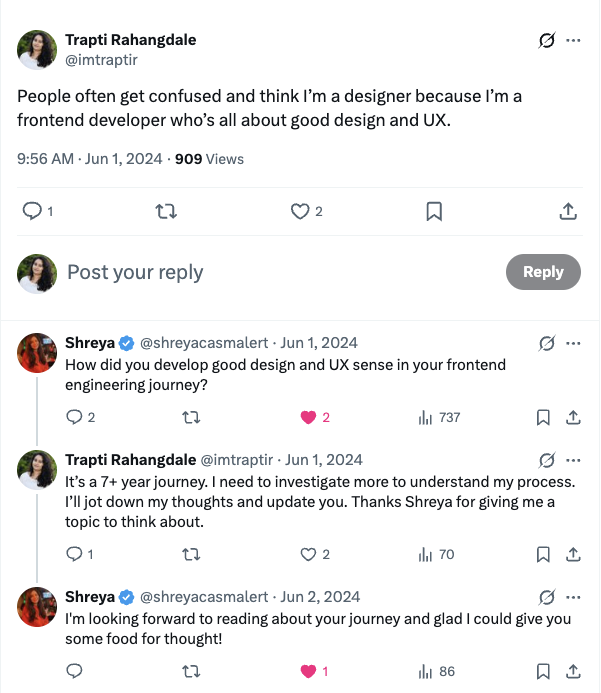
This gave me a moment to reflect on my journey, and here’s what’s on my mind.
It would be wrong for me to say I always knew I wanted to focus on design and UX. This is something I gradually developed.
In the early days, I was simply someone who liked “good design.” Back then, good design meant a visually appealing interfaces, nice colors, fancy layouts, and smooth animations. Like many frontend developers, I mostly implemented what the designers handed over.
Occasionally, I had opinions, but I rarely voiced them.
The Shift: From Execution to Curiosity
Things changed when I began asking simple questions:
- Why was this designed this way?
- What problem is this solving?
- Could there be a better approach?
At first, my suggestions weren’t great, and most of them didn’t get implemented. But that wasn’t the point. I was learning.
Over time, these conversations turned into meaningful discussions with designers. Instead of just “building screens,” I became part of the thinking process.
What Actually Helped Me Improve
Here are a few things that genuinely shaped my design and UX understanding:
1. Working closely with designers
I’ve had the chance to collaborate with multiple designers, and each one taught me something different, from visual hierarchy to user thinking.
2. Thinking about real users
I started focusing more on how users actually interact with what we build:
- Is this easy to understand?
- Can someone use this without guidance?
- Where can they get confused?
This shift helped me move from “looks good” to “works well.”
3. Asking questions and giving suggestions
I learned from every discussion, even when others didn’t accept my ideas. Over time, my suggestions became more practical and grounded.
4. Learning beyond code
I stopped limiting myself to programming content and started reading design and UX articles. This broadened my perspective significantly.
5. Learning to critique design, not just admire it
Instead of passively scrolling through platforms like Dribbble, I began analyzing designs more critically:
- Would this work in a real product?
- Is this solving a real problem or just looking good?
- Is the animation meaningful or just decorative?
6. Understanding business requirements
While working on products like CMS and subscription platforms, I realized design isn’t just about aesthetics; it’s about solving business problems and user needs.
This shift also helped me understand products at a deeper level. In my current role, where we build a B2B product without a dedicated designer, these skills have become especially valuable. I’m able to think through UX decisions, question flows, and contribute beyond just implementation.
What I Believe Now
Good design isn’t just about how something looks. It’s about how it works, how it feels, and how effectively it solves a problem.
As frontend developers, we’re in a unique position: we bridge design and functionality. The frontend is where users actually experience the product, so whatever we build is what they interact with. Because of that, I’ve learned to take more responsibility in questioning and improving things, whether they come from design or backend, before they reach the user.
And most importantly, this is not a skill you “decide” to have one day. It’s something you develop slowly, by staying curious, asking questions, and learning from others.
If you’re a frontend developer, don’t just aim to develop the design as it is; aim to understand the reasons behind the design. That’s where real growth begins.